
Although PHP can send emails through the mail() function, it is not the recommended option. Instead, we advise using SMTP authentication to guarantee more reliable delivery.
Using SMTP is almost as simple as mail(), but with the benefit of better deliverability and security. Setting it up only requires one extra step: entering the server details.
- In PrestaShop, the option is built in natively under: Advanced Parameters > E-mail > Set my own SMTP parameters.
- In WordPress, you can easily configure SMTP with the WP Mail SMTP plugin:
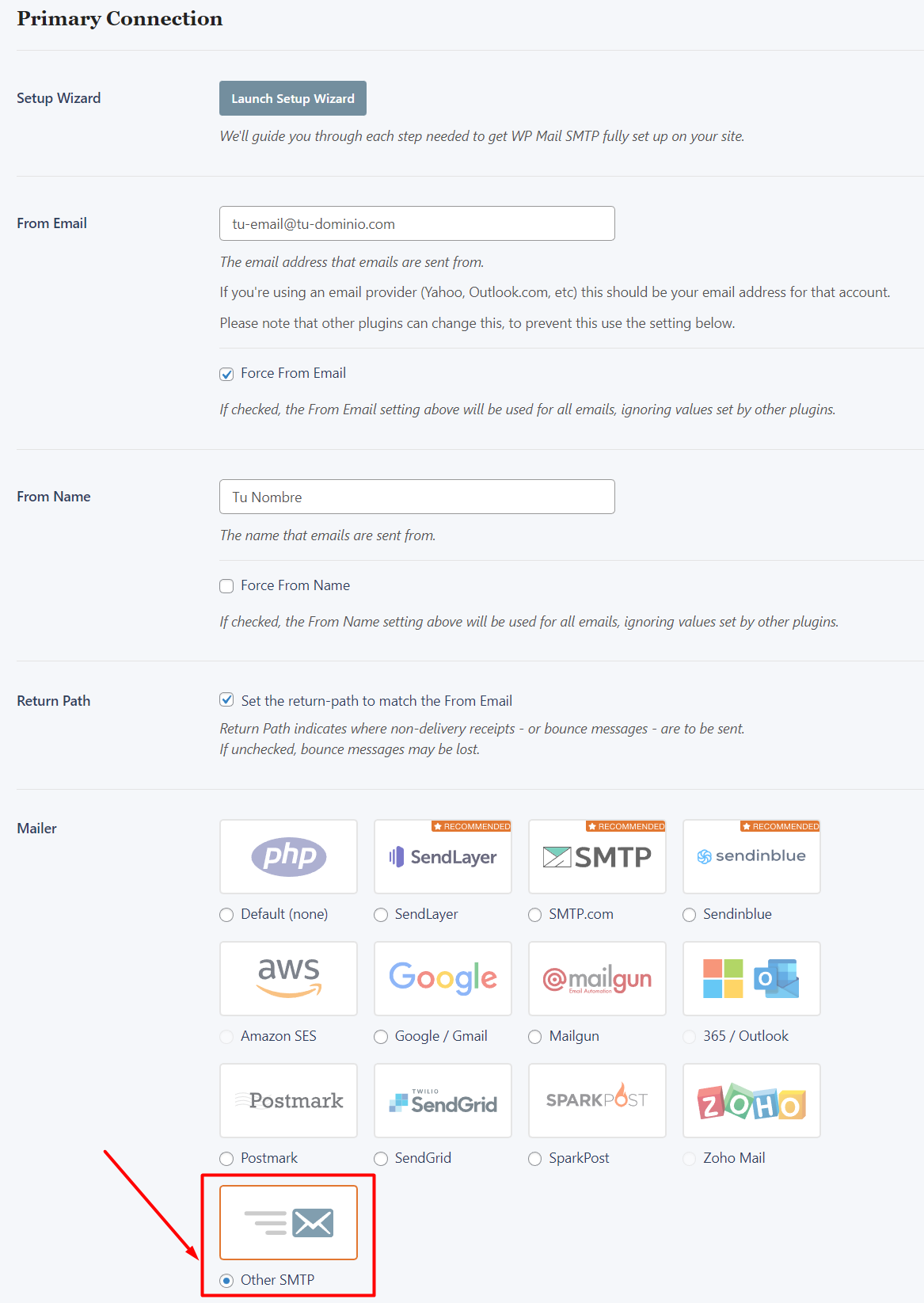
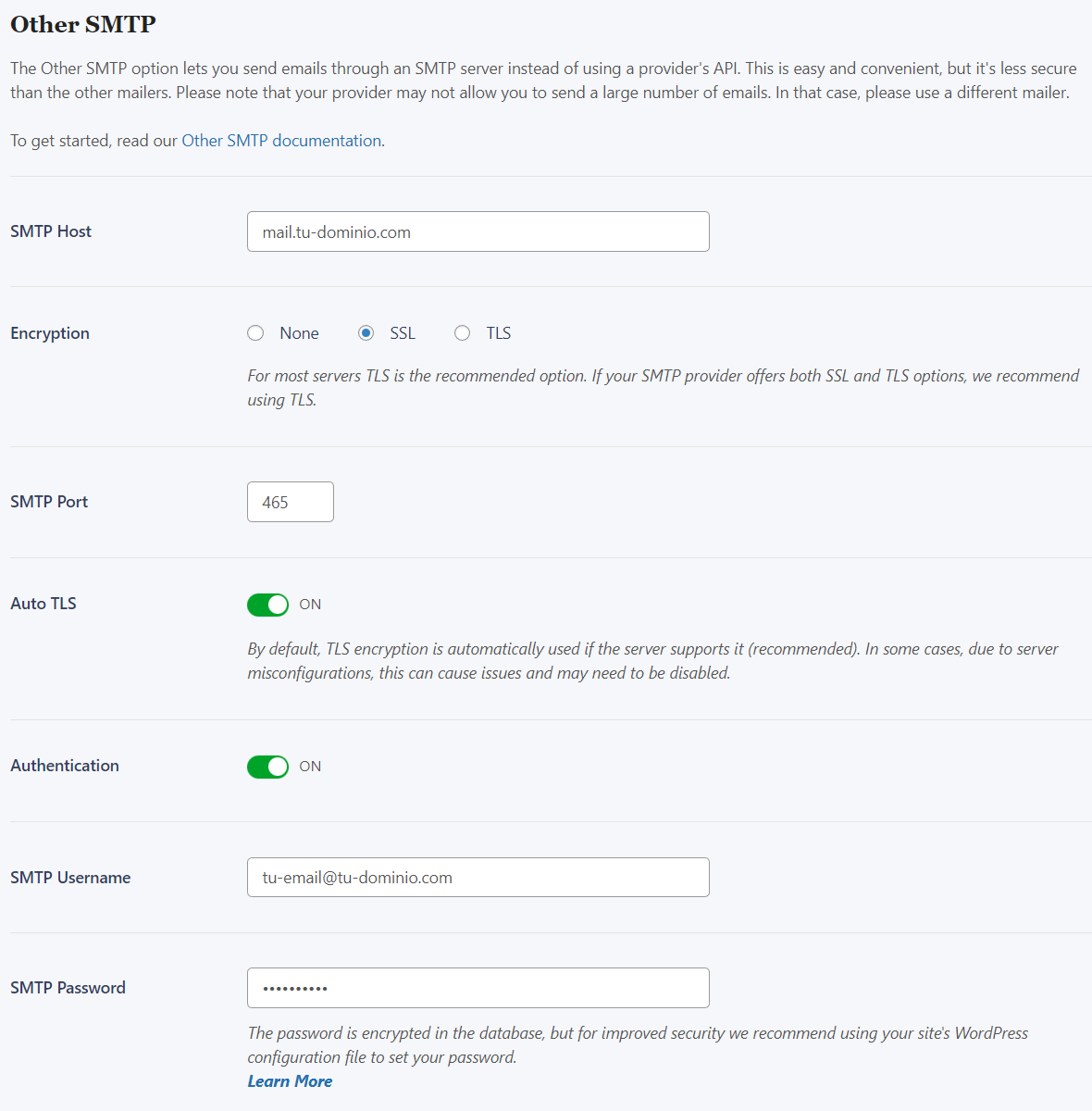
This video explains the whole process for WordPress and WooCommerce (in Spanish):
The server, username and port details you need are in the guide Setting up your email client.
Why do we recommend SMTP authentication?
SMTP authentication improves your delivery rate and reduces the chance of your emails being flagged as SPAM. Here is why:
It verifies the sender's authenticity
- Emails sent over SMTP include headers certifying that the sender is legitimate.
- For example, if you receive an email from
steve-jobs@apple.com, you can be sure it really comes from that address. - With
mail(), on the other hand, anyone can forge the sender, which increases the chance of the email being treated as SPAM.
More security
- It does not expose the path of your PHP scripts.
- It uses an encrypted connection to protect the information.
- It reduces the risk of abuse and fraudulent sending.
Compatibility with external services
- It lets you integrate solutions such as Amazon SES, Gmail, SendGrid or Mailgun, among others.
Better error handling
- SMTP provides detailed response codes that make troubleshooting easier.
- It offers more flexibility for configuring headers and handling bulk sending.
Conclusion
If you are after reliability, security and a better delivery rate, use authenticated SMTP with libraries such as PHPMailer or SwiftMailer instead of PHP's mail() function.